
How we handle large scale water extraction for Medical District facilities and clinics
Water damage in a medical facility isn’t just about wet floors. It’s about patient safety, regulatory compliance, and preventing contamination in sterile environments. When a burst pipe floods a surgical suite or a roof leak threatens sensitive diagnostic equipment, every minute counts. Our specialized team responds 24/7 to Memphis Medical District facilities with IICRC-certified technicians trained in ICRA protocols and HIPAA compliance. Rapid water restoration for business owners in Downtown Memphis.
We understand the unique challenges of healthcare restoration. Unlike residential jobs, medical facilities require containment strategies that prevent cross-contamination, specialized drying equipment that maintains air quality, and documentation that satisfies Joint Commission audits. From the University of Tennessee Health Science Center to private clinics along Union Avenue, we’ve developed the expertise to restore your facility quickly while keeping patients and staff safe.
Specialized Healthcare Restoration Protocols
Medical facilities operate under strict infection control standards that don’t apply to standard commercial buildings. Our restoration process begins with a comprehensive Infection Control Risk Assessment (ICRA) that categorizes the work area based on patient vulnerability and contamination risk. Level I applies to administrative areas, while Level III or IV protocols are required for operating rooms, intensive care units, and isolation wards.
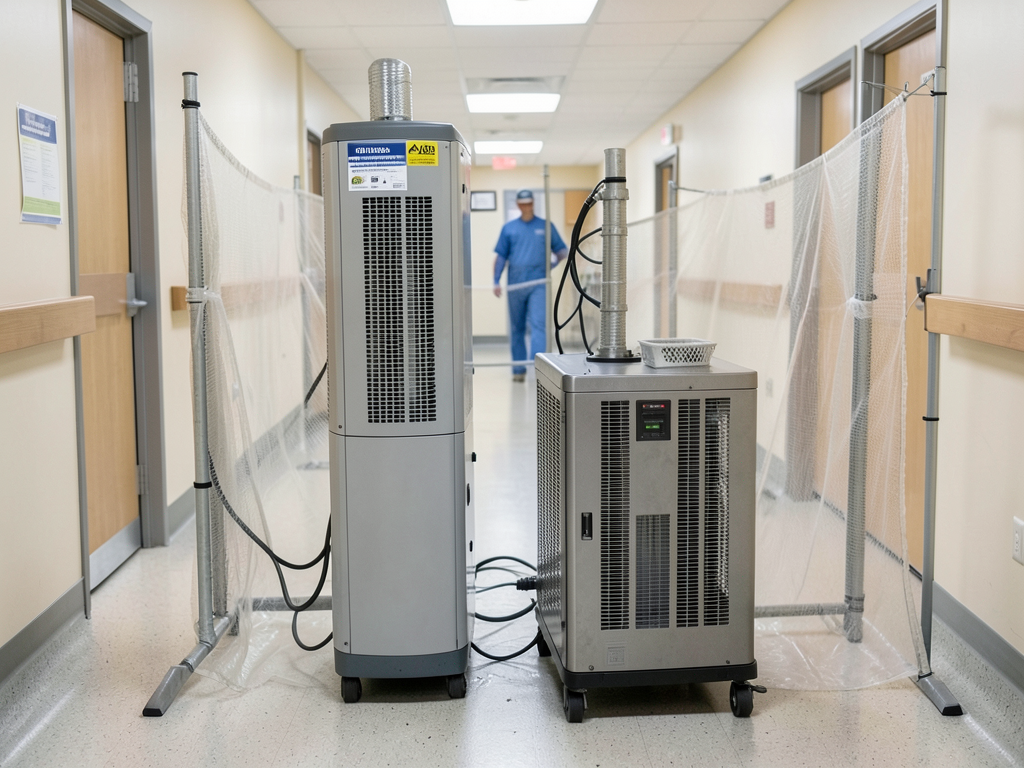
Containment is our first priority. We establish negative air pressure zones using HEPA-filtered air scrubbers that prevent contaminated air from spreading beyond the work area. All technicians wear appropriate personal protective equipment based on the ICRA level, and we use antimicrobial treatments that are safe for healthcare environments. Our equipment includes industrial-grade LGR dehumidifiers that maintain specific humidity levels required for sensitive medical equipment. EPA Renovation, Repair and Painting Program.
Documentation is critical in healthcare settings. We maintain detailed logs of moisture readings, temperature and humidity levels, and all restoration activities. This documentation satisfies Joint Commission requirements and provides your facility with the records needed for insurance claims and regulatory audits. Our team coordinates directly with facility managers to minimize disruption to patient care and ensure all work complies with Tennessee healthcare regulations.
HIPAA-Compliant Water Damage Recovery
Patient privacy extends beyond medical records. When our technicians work in areas containing sensitive patient information, we implement strict protocols to protect both physical documents and electronic data systems. All staff members sign confidentiality agreements and receive HIPAA training specific to restoration work in healthcare environments.. Read more about What to do when a fire sprinkler system malfunctions in your Downtown Memphis office.
We establish secure zones around areas containing patient records, medical charts, or electronic health record systems. Our technicians are trained to recognize and protect these areas, using containment barriers and signage to prevent unauthorized access. If water damage threatens server rooms or data storage areas, we coordinate with your IT department to ensure proper shutdown procedures and protect critical patient information. Water Damage Restoration Collierville.
Equipment salvage is another HIPAA consideration. Medical imaging equipment, diagnostic devices, and laboratory instruments often contain stored patient data. Our team works with biomedical engineers to properly handle and, when necessary, destroy contaminated equipment while maintaining chain of custody documentation. We understand that a HIPAA violation during restoration can result in fines and legal liability far exceeding the cost of water damage repair.
Our Memphis Service Area & Rapid Response Times
Located in the heart of Memphis, we provide emergency water extraction services to the entire Medical District, including the area bounded by Danny Thomas Boulevard, Madison Avenue, and Manassas Street. Our average response time to the University of Tennessee Health Science Center is under 45 minutes, and we can reach Baptist Memorial Hospital within 30 minutes of your call. Emergency Dehumidifier Rental.
The Medical District presents unique challenges due to its dense concentration of healthcare facilities and limited access points. We maintain radio contact with facility security teams and have established protocols for after-hours entry and emergency access. Our fleet includes vehicles equipped with specialized medical restoration equipment, allowing us to respond quickly without compromising on the tools needed for healthcare environments.
Memphis’s high humidity levels, averaging 70% year-round, create additional challenges for medical facility restoration. We use desiccant dehumidifiers capable of maintaining relative humidity below 40% in large spaces, which is critical for preventing mold growth in patient care areas. Our equipment is calibrated to handle the specific moisture loads created by Memphis’s climate, ensuring faster drying times and better results than standard restoration equipment.
Advanced Technology for Medical Drying
Medical facility restoration requires technology that goes beyond standard water damage equipment. Our HEPA-filtered air scrubbers remove 99.97% of particles 0.3 microns or larger, which is essential for maintaining air quality in sterile environments. We use industrial-grade LGR dehumidifiers with capacities up to 500 pints per day for large medical spaces.
Thermal imaging cameras help us identify hidden moisture behind walls and under flooring without destructive testing. This is particularly important in medical facilities where unnecessary demolition can disrupt patient care and extend restoration timelines. Our moisture meters are calibrated for various building materials commonly found in healthcare construction, from concrete slabs to specialized wall systems.
We employ antimicrobial treatments specifically formulated for healthcare environments. These EPA-registered products kill mold, bacteria, and viruses without leaving harmful residues that could affect patients or medical equipment. Our technicians are trained in the proper application techniques to ensure complete coverage while maintaining safety in occupied areas.
Case Studies: Memphis Healthcare Success Stories
A burst pipe in the basement of a Union Avenue medical office complex threatened to shut down operations for a major healthcare provider. Our team arrived within 30 minutes, established containment around the electrical panels, and extracted over 2,000 gallons of water using truck-mounted extraction units. We restored full operations within 48 hours while maintaining ICRA Level II protocols throughout the facility.
At a Midtown dental clinic, a roof leak during a severe thunderstorm damaged the reception area and patient treatment rooms. We implemented immediate containment to protect patient records and X-ray equipment, then used specialized drying techniques to salvage the hardwood flooring and cabinetry. The clinic reopened the next morning with minimal disruption to scheduled patients. Can you save the hardwood floors in your Cooper-Young bungalow after a flood?.
A laboratory facility near the University of Memphis experienced a Category 3 water event from a sewage backup. Our team performed complete decontamination using hospital-grade disinfectants, replaced contaminated materials, and conducted post-restoration air quality testing to ensure the space met all safety standards before laboratory operations resumed.
Biohazard Cleanup and Black Water Decontamination
Medical facilities face unique biohazard risks during water damage events. Sewage backups, contaminated floodwaters, and even clean water that becomes contaminated during a disaster all require specialized handling. Our technicians are certified in bloodborne pathogen cleanup and understand the specific protocols required for healthcare environments.
Category 3 water, also known as black water, contains harmful bacteria, viruses, and other pathogens. In medical settings, this might include sewage, toilet backflow, or floodwater that has entered the building. We use EPA-registered disinfectants at concentrations approved for healthcare use and follow OSHA bloodborne pathogen standards throughout the cleanup process.
Decontamination goes beyond surface cleaning. We use ATP testing to verify that surfaces meet hospital cleanliness standards, typically requiring readings below 30 relative light units. Our process includes removal of contaminated materials, thorough cleaning of salvageable items, and post-remediation verification testing to ensure the space is safe for patient care. Cleaning up a flooded basement in Bartlett before the damage gets worse.
Salvaging High-Value Medical Imaging and Diagnostic Equipment
Medical imaging equipment represents a significant investment, often costing hundreds of thousands of dollars. When water threatens MRI machines, CT scanners, or X-ray equipment, our priority shifts to protection and preservation. We work with biomedical engineers to develop specific protocols for each type of equipment based on manufacturer recommendations.
Moisture control is critical for electronic medical equipment. We maintain relative humidity levels between 30-50% during the drying process to prevent condensation on sensitive components. Our technicians use specialized drying chambers and desiccant technology to create micro-environments around critical equipment, allowing the rest of the facility to dry while protecting valuable assets.
Documentation for insurance purposes includes detailed photographs, moisture mapping, and equipment status reports. We understand that medical facilities often have specific insurance riders for high-value equipment, and our documentation supports these claims while providing the evidence needed for regulatory compliance.
24/7 Emergency Mobilization for Memphis-Area Hospitals
Healthcare facilities cannot afford downtime. Our emergency response team maintains 24/7 availability with technicians on-call throughout the Memphis area. When you call (901) 640-3133, you speak directly with a certified restoration specialist who can mobilize our team within minutes.
Our emergency response vehicles are stocked with medical-grade restoration equipment, including HEPA air scrubbers, commercial dehumidifiers, and specialized containment materials. We maintain relationships with local medical equipment suppliers and can quickly source replacement materials if needed to minimize facility downtime.
Communication is critical during medical facility emergencies. We assign a dedicated project manager to each job who serves as your single point of contact throughout the restoration process. This manager coordinates with facility administrators, maintenance staff, and regulatory compliance officers to ensure all work meets your specific requirements.
Preventing Future Water Damage in Medical Facilities
Prevention is always better than emergency response. We offer comprehensive facility assessments that identify potential water damage risks specific to healthcare environments. This includes evaluating plumbing systems, roof conditions, HVAC components, and building envelope integrity.
Many medical facilities in Memphis were built before modern building codes addressed water intrusion prevention. We can identify vulnerabilities in older construction and recommend cost-effective solutions to prevent future damage. This might include upgrading plumbing systems, improving roof drainage, or installing water detection systems in critical areas.
Regular maintenance programs help prevent water damage emergencies. We provide scheduled inspections of high-risk areas, including mechanical rooms, roof penetrations, and plumbing systems. Early detection of potential problems can prevent the costly shutdowns and patient care disruptions associated with major water damage events.
Compliance with Tennessee Healthcare Regulations
Tennessee healthcare facilities must comply with state regulations regarding environmental conditions, including humidity control, air quality, and contamination prevention. Our restoration processes are designed to meet or exceed these requirements, ensuring your facility remains compliant throughout the restoration process.
We maintain current knowledge of Tennessee Department of Health regulations and Joint Commission standards as they relate to environmental conditions in healthcare facilities. Our documentation includes all required information for regulatory inspections and provides evidence of compliance with state and federal standards.
Post-restoration testing verifies that environmental conditions meet all regulatory requirements. This includes air quality testing, humidity verification, and surface contamination testing where required. We provide detailed reports that facility administrators can use for regulatory submissions and internal quality assurance documentation.
Insurance and Documentation Support
Medical facility insurance claims require extensive documentation. We provide comprehensive documentation packages that include before and after photographs, moisture mapping, equipment logs, and detailed cost breakdowns. Our experience with healthcare insurance claims ensures we provide the specific documentation your carrier requires.
We work directly with insurance adjusters and can provide on-site consultations to explain our restoration processes and justify our recommendations. Our documentation supports both the immediate damage claim and any related business interruption claims that may arise from facility downtime.
Third-party verification testing provides additional documentation support. We can arrange for independent testing of air quality, surface contamination, and equipment functionality to provide objective evidence of restoration success. This testing often satisfies insurance requirements and provides additional protection against future liability claims.
Cost Considerations for Medical Facility Restoration
Medical facility restoration costs vary based on the extent of damage, the ICRA level required, and the specific equipment needed. While healthcare restoration typically costs more than standard commercial restoration, the investment protects your facility’s reputation, prevents regulatory violations, and ensures patient safety.
Factors affecting cost include the size of the affected area, the type of water involved, the need for specialized containment, and the requirement for after-hours work to minimize patient disruption. We provide detailed cost estimates that break down all components of the restoration process, allowing facility administrators to make informed decisions.
Insurance coverage for medical facility water damage varies by policy. We can review your coverage and help identify potential out-of-pocket expenses. Our experience with healthcare facility claims helps us anticipate and address potential coverage issues before they become problems.
Training and Certification of Our Medical Restoration Team
Our technicians hold multiple certifications specific to healthcare restoration, including IICRC WRT (Water Damage Restoration Technician), ASD (Applied Structural Drying), and ICRA (Infection Control Risk Assessment) certifications. We maintain ongoing training to stay current with evolving healthcare regulations and restoration technologies.
Specialized training includes handling medical gases, working around electrical systems in patient care areas, and understanding the specific requirements for different types of medical equipment. Our team members must pass both written and practical examinations to demonstrate their competency in healthcare restoration protocols.
We maintain relationships with local medical facilities for ongoing training opportunities. This includes regular updates on new equipment, changes in regulatory requirements, and emerging best practices in healthcare restoration. Our commitment to continuous education ensures we provide the highest level of service to Memphis medical facilities.
Environmental Considerations in Medical Restoration
Medical facility restoration must consider environmental impacts, particularly regarding waste disposal and chemical use. We follow all EPA regulations for disposal of contaminated materials and use environmentally responsible products whenever possible without compromising effectiveness.
Energy efficiency during the restoration process helps minimize operational costs for medical facilities. Our equipment is selected for optimal performance while minimizing energy consumption. We can implement staged drying processes that allow critical areas to return to service while less critical areas continue restoration work.
Indoor air quality monitoring continues throughout the restoration process. We use real-time monitoring equipment to track particulate levels, VOC concentrations, and humidity levels. This data helps us adjust our processes to maintain safe conditions for patients, staff, and visitors throughout the restoration period.
Community Impact and Healthcare Continuity
When a medical facility experiences water damage, the impact extends beyond the building itself. Patient care disruption, appointment cancellations, and potential emergency department diversions affect the entire community. Our rapid response helps minimize these community impacts by getting facilities back to full operation as quickly as possible.
We understand the critical nature of healthcare services in Memphis. Our team prioritizes medical facility emergencies over other restoration calls, ensuring that hospitals, clinics, and laboratories receive immediate attention when water damage threatens patient care. This community-focused approach has made us the trusted restoration partner for many Memphis healthcare providers.
Long-term relationships with medical facilities allow us to provide proactive support beyond emergency response. We assist with disaster preparedness planning, conduct regular facility assessments, and provide training to facility staff on water damage prevention and initial response protocols.
Choosing the Right Medical Facility Restoration Partner
Not all restoration companies have the expertise needed for medical facilities. When selecting a restoration partner, verify their ICRA certification, HIPAA compliance protocols, and experience with healthcare environments. Ask about their response times, equipment capabilities, and documentation processes specific to medical facilities.
Experience matters in medical restoration. Look for companies that have successfully completed similar projects in healthcare settings and can provide references from medical facility administrators. Understanding of healthcare regulations and ability to work within the constraints of patient care operations are essential qualifications.
Insurance and liability coverage should be verified before any work begins. Medical facilities require contractors with comprehensive liability insurance, workers’ compensation coverage, and specific endorsements for healthcare work. Our documentation includes all required insurance certificates and can be provided to facility administrators for review.
Ready to Protect Your Medical Facility?
Water damage in a medical facility requires immediate attention from specialists who understand healthcare environments. Our team stands ready to respond to your emergency 24/7. With our specialized equipment, certified technicians, and proven protocols, we’ll restore your facility quickly while maintaining the highest standards of patient safety and regulatory compliance.
Don’t wait until water damage threatens your operations. Call (901) 640-3133 now to discuss your facility’s specific needs or to establish a pre-disaster response plan. Our team will work with you to develop protocols that protect your patients, your staff, and your critical medical equipment from water damage emergencies.
Every minute counts when water threatens a medical facility. Make the call that protects your patients and your practice. Contact us today at (901) 640-3133 for immediate assistance or to schedule a facility assessment. Your patients are counting on you, and we’re here to help you deliver uninterrupted care.
Frequently Asked Questions
What makes medical facility water damage restoration different from residential restoration?
Medical facility restoration requires ICRA protocols, HIPAA compliance, specialized containment to prevent cross-contamination, and documentation that satisfies Joint Commission and Tennessee healthcare regulations. The focus is on patient safety and regulatory compliance rather than just drying the building.
How quickly can you respond to a medical facility emergency in Memphis?
Our average response time to the Memphis Medical District is under 45 minutes, with 24/7 availability. We maintain emergency response vehicles stocked with medical-grade restoration equipment and can mobilize our team within minutes of your call to (901) 640-3133.
Do you work with insurance companies for medical facility claims?
Yes, we have extensive experience with healthcare facility insurance claims and provide comprehensive documentation packages that include moisture mapping, equipment logs, and detailed cost breakdowns. We work directly with insurance adjusters and can provide on-site consultations to support your claim.
What certifications do your technicians hold for medical facility restoration?
Our technicians hold IICRC WRT, ASD, and ICRA certifications, along with specialized training in HIPAA compliance, bloodborne pathogen cleanup, and healthcare environment protocols. We maintain ongoing training to stay current with evolving healthcare regulations and restoration technologies. For more information, visit CDC Bloodborne Pathogens Guidelines.
{
“@context”: “https://schema.org”,
“@type”: “BlogPosting”,
“headline”: “How we handle large scale water extraction for Medical District facilities and clinics”,
“description”: “Specialized water damage restoration for Memphis Medical District clinics. HIPAA-compliant, ICRA-certified protocols. 24/7 emergency response. Call (901) 640-3133.”,
“wordCount”: 2937,
“datePublished”: “2026-04-16T11:15:00.000Z”,
“dateModified”: “2026-04-16T11:15:00.000Z”,
“inLanguage”: “en-US”,
“mainEntityOfPage”: {
“@type”: “WebPage”,
“@id”: “https://victorywaterdamagerestorationmemphis.com”
},
“publisher”: {
“@type”: “LocalBusiness”,
“name”: “Victory Water Damage Restoration Memphis”,
“url”: “https://victorywaterdamagerestorationmemphis.com”
},
“author”: {
“@type”: “Organization”,
“name”: “Victory Water Damage Restoration Memphis”,
“url”: “https://victorywaterdamagerestorationmemphis.com”
},
“image”: {
“@type”: “ImageObject”,
“url”: “https://victorywaterdamagerestorationmemphis.com/wp-content/uploads/2026/03/how-we-handle-large-scale-water-extraction-for-med-1.png”
}
}
{
“@context”: “https://schema.org”,
“@type”: “LocalBusiness”,
“name”: “Victory Water Damage Restoration Memphis”,
“url”: “https://victorywaterdamagerestorationmemphis.com”,
“address”: {
“@type”: “PostalAddress”,
“addressLocality”: “Memphis”
},
“areaServed”: {
“@type”: “City”,
“name”: “Memphis”
}
}
{
“@context”: “https://schema.org”,
“@type”: “FAQPage”,
“mainEntity”: [
{
“@type”: “Question”,
“name”: “Ready to Protect Your Medical Facility?”,
“acceptedAnswer”: {
“@type”: “Answer”,
“text”: “Water damage in a medical facility requires immediate attention from specialists who understand healthcare environments. Our team stands ready to respond to your emergency 24/7. With our specialized equipment, certified technicians, and proven protocols, we’ll restore your facility quickly while maintaining the highest standards of patient safety and regulatory compliance.”
}
},
{
“@type”: “Question”,
“name”: “What makes medical facility water damage restoration different from residential restoration?”,
“acceptedAnswer”: {
“@type”: “Answer”,
“text”: “Medical facility restoration requires ICRA protocols, HIPAA compliance, specialized containment to prevent cross-contamination, and documentation that satisfies Joint Commission and Tennessee healthcare regulations. The focus is on patient safety and regulatory compliance rather than just drying the building.”
}
},
{
“@type”: “Question”,
“name”: “How quickly can you respond to a medical facility emergency in Memphis?”,
“acceptedAnswer”: {
“@type”: “Answer”,
“text”: “Our average response time to the Memphis Medical District is under 45 minutes, with 24/7 availability. We maintain emergency response vehicles stocked with medical-grade restoration equipment and can mobilize our team within minutes of your call to (901) 640-3133.”
}
},
{
“@type”: “Question”,
“name”: “Do you work with insurance companies for medical facility claims?”,
“acceptedAnswer”: {
“@type”: “Answer”,
“text”: “Yes, we have extensive experience with healthcare facility insurance claims and provide comprehensive documentation packages that include moisture mapping, equipment logs, and detailed cost breakdowns. We work directly with insurance adjusters and can provide on-site consultations to support your claim.”
}
},
{
“@type”: “Question”,
“name”: “What certifications do your technicians hold for medical facility restoration?”,
“acceptedAnswer”: {
“@type”: “Answer”,
“text”: “Our technicians hold IICRC WRT, ASD, and ICRA certifications, along with specialized training in HIPAA compliance, bloodborne pathogen cleanup, and healthcare environment protocols. We maintain ongoing training to stay current with evolving healthcare regulations and restoration technologies. For more information, visit CDC Bloodborne Pathogens Guidelines.”
}
}
]
}
{
“@context”: “https://schema.org”,
“@type”: “BreadcrumbList”,
“itemListElement”: [
{
“@type”: “ListItem”,
“position”: 1,
“name”: “Home”,
“item”: “https://victorywaterdamagerestorationmemphis.com”
},
{
“@type”: “ListItem”,
“position”: 2,
“name”: “Blog”,
“item”: “https://victorywaterdamagerestorationmemphis.com/blog”
},
{
“@type”: “ListItem”,
“position”: 3,
“name”: “How we handle large scale water extraction for Medical District facilities and clinics”
}
]
}
{
“@context”: “https://schema.org”,
“@type”: “Service”,
“serviceType”: “Water Damage Restoration”,
“provider”: {
“@type”: “LocalBusiness”,
“name”: “Victory Water Damage Restoration Memphis”,
“url”: “https://victorywaterdamagerestorationmemphis.com”
},
“areaServed”: {
“@type”: “City”,
“name”: “Memphis”
},
“description”: “Specialized water damage restoration for Memphis Medical District clinics. HIPAA-compliant, ICRA-certified protocols. 24/7 emergency response. Call (901) 640-3133.”
}