
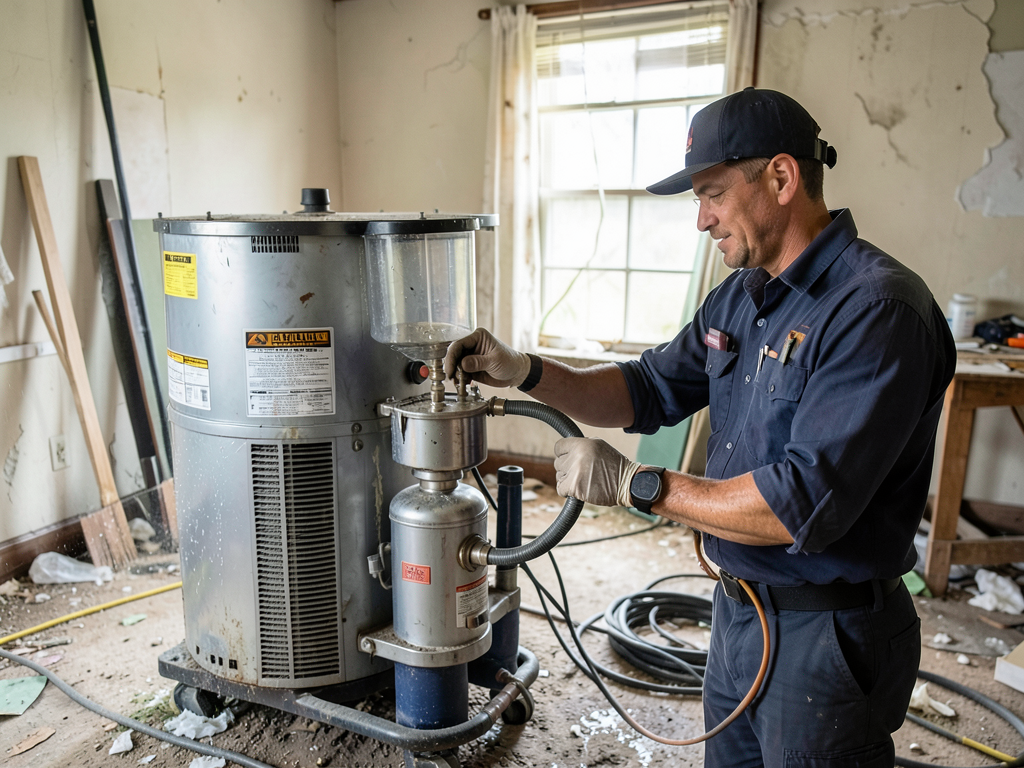
Why Professional Air Scrubbers Are Necessary When Drying Out a Water-Damaged Memphis Home
Water damage in Memphis homes creates more than just wet floors and walls. When moisture infiltrates your living space, it triggers a cascade of problems that can threaten your family’s health and your property’s structural integrity. Professional air scrubbers become essential tools in this process because they actively filter the air while structural drying equipment works to remove moisture from materials. Rapid water restoration for business owners in Downtown Memphis.
The humid Memphis climate, with summer dew points often exceeding 70°F, creates perfect conditions for mold growth within 24-48 hours of water exposure. Standard box fans or household dehumidifiers cannot address the airborne contaminants released when water-damaged materials begin to break down. Professional air scrubbers, equipped with HEPA filtration systems, capture particles as small as 0.3 microns, including mold spores, bacteria, and dust that become aerosolized during the drying process. EPA Mold Resources.
Without proper air filtration, the very process of drying out your home can spread contamination throughout your HVAC system and into previously unaffected areas. This is particularly concerning in older Memphis neighborhoods like Midtown and East Memphis, where many homes have central air systems that can distribute airborne particles across multiple rooms. Professional restoration companies use air scrubbers as part of a comprehensive approach that includes containment barriers, negative air pressure, and continuous air quality monitoring.. Read more about Is it actually safe for your family to stay in your Memphis home during the drying process?.
The science behind air scrubbing involves creating negative air pressure in the affected area, which prevents contaminated air from escaping while clean, filtered air is continuously circulated. This process is critical when dealing with Category 2 or 3 water damage from sources like washing machine overflows or sewage backups, which are common issues in Memphis homes due to aging plumbing infrastructure. The air scrubbers work alongside industrial dehumidifiers and air movers, creating a controlled environment that accelerates drying while maintaining safe air quality standards. Emergency Dehumidifier Rental.
Professional air scrubbers also play a vital role in protecting your family’s respiratory health. The Tennessee Department of Health reports increased respiratory issues in areas affected by indoor water damage, particularly among children and elderly residents. The HEPA filters in professional-grade equipment capture allergens and irritants that can trigger asthma attacks or other respiratory conditions, providing peace of mind during the stressful restoration process. Water Damage Restoration Collierville.
When you’re facing water damage in your Memphis home, the difference between DIY drying and professional restoration often comes down to air quality management. Professional air scrubbers represent a critical investment in your family’s health and your home’s long-term stability, especially given Memphis’s unique climate challenges and the potential for hidden moisture problems in our region’s older housing stock.. Read more about How to tell the difference between mold and mildew in your Cherokee basement.
How Air Scrubbers Work During Water Damage Restoration
Professional air scrubbers operate through a multi-stage filtration process that begins with pre-filters to capture larger particles like dust and debris. The heart of the system is the HEPA filter, which traps microscopic particles that standard filters cannot capture. Some advanced models also include activated carbon filters to absorb odors and volatile organic compounds released by water-damaged materials.
The equipment creates negative air pressure by continuously drawing air from the affected area and exhausting it through the filtration system. This pressure differential ensures that any air movement occurs toward the scrubber rather than allowing contaminated air to escape into clean areas of your home. Technicians often use containment barriers in conjunction with air scrubbers to create isolated work zones, particularly important in occupied homes where restoration work must continue while residents remain in unaffected areas.
Air exchange rates vary by model but typically range from 500 to 2,000 cubic feet per minute. For a standard Memphis home with 2,000 square feet and 8-foot ceilings, this means the air scrubber can process the entire air volume of a room several times per hour. This continuous filtration is essential because as materials dry, they release particles into the air that were previously trapped in the moisture.
The effectiveness of air scrubbing is measured by the Clean Air Delivery Rate (CADR), which indicates the volume of filtered air delivered by the unit. Professional restoration companies select air scrubbers based on the square footage of the affected area and the severity of contamination. In Memphis’s humid climate, where mold growth can accelerate rapidly, maintaining optimal air quality during the drying process is not just about comfort—it’s about preventing secondary damage that could extend restoration timelines and increase costs.
Professional technicians also use air scrubbers in conjunction with moisture meters and thermal imaging cameras to verify that drying progress is not accompanied by the spread of airborne contaminants. This integrated approach ensures that when the visible signs of water damage are gone, the air quality in your home has also been restored to safe levels.
Memphis-Specific Air Quality Challenges During Restoration
Memphis’s geographic location and climate create unique challenges for water damage restoration that make air scrubbing particularly important. The city sits in the Mississippi River Valley, where high humidity levels persist throughout much of the year. This moisture-rich environment means that water-damaged homes face accelerated mold growth potential compared to drier regions.
The aging housing stock in many Memphis neighborhoods adds another layer of complexity. Homes built before the 1980s often contain materials like asbestos or lead-based paint that can become hazardous when water-damaged. Professional air scrubbers with HEPA filtration are essential for containing these potentially dangerous particles during the restoration process. The Shelby County Health Department recommends professional assessment for any water damage in homes built before 1978 due to these concerns.
Memphis’s seasonal weather patterns also influence restoration approaches. Summer thunderstorms can drop several inches of rain in a matter of hours, overwhelming drainage systems in areas like Downtown Memphis and Harbor Town. When these events cause water intrusion, the combination of warm temperatures and high humidity creates ideal conditions for rapid microbial growth. Professional air scrubbers help control this growth by removing spores from the air before they can settle and colonize new surfaces.
The city’s infrastructure challenges contribute to water damage scenarios that require specialized air quality management. Combined sewer overflow systems in older parts of Memphis can back up during heavy rains, introducing contaminated water into basements and crawl spaces. This Category 3 water damage requires not only thorough cleaning and disinfection but also continuous air scrubbing to remove harmful bacteria and other pathogens from the air during the restoration process. Cleaning up a flooded basement in Bartlett before the damage gets worse.
Professional restoration companies in Memphis must also consider the impact of local allergens and pollutants. The city’s location along major transportation routes means that outdoor air can contain higher levels of particulates, which become problematic when homes are opened up for drying. Air scrubbers help maintain indoor air quality by filtering these external contaminants while the restoration work is underway.
Equipment Specifications and Selection Criteria
Professional air scrubbers used in Memphis water damage restoration typically feature multi-stage filtration systems with pre-filters, HEPA filters, and often activated carbon components. The pre-filters capture larger particles like dust and debris, extending the life of the more expensive HEPA filters. HEPA filters must meet Department of Energy standards, capturing at least 99.97% of particles 0.3 microns in diameter.
Airflow capacity is measured in cubic feet per minute (CFM), with units ranging from compact models at 500 CFM to large industrial units exceeding 2,000 CFM. For residential applications in Memphis homes, units typically fall in the 500-1,500 CFM range. The selection depends on the affected area’s size, the contamination level, and whether the space is compartmentalized by walls or open floor plans.
Noise levels are an important consideration, especially in occupied homes. Professional-grade air scrubbers operate at 50-70 decibels, comparable to normal conversation to a vacuum cleaner. This allows them to run continuously during restoration without causing excessive disruption to household activities.
Energy efficiency has improved significantly in recent years, with modern units consuming 2-3 amps at 120 volts while maintaining high filtration efficiency. This translates to operating costs of approximately $0.25-0.50 per day for continuous use, a small price compared to the potential costs of inadequate air quality management during restoration.
Portability features include wheeled bases, carrying handles, and stackable designs that allow multiple units to be deployed in larger affected areas. In Memphis’s older homes with narrow hallways and staircases, the ability to maneuver equipment efficiently is crucial for effective restoration.
Filter replacement indicators and easy-access filter compartments allow technicians to monitor and maintain equipment performance throughout the restoration process. In Memphis’s humid climate, where air scrubbers often run for extended periods, regular filter changes are essential for maintaining optimal performance and preventing the growth of microorganisms within the filtration system itself.
The Restoration Process: Air Scrubbing Integration
Professional water damage restoration follows a systematic process where air scrubbing is integrated from the initial assessment through project completion. The process begins with a thorough inspection using moisture meters and thermal imaging to identify all affected areas, including hidden moisture in wall cavities and under flooring—common issues in Memphis homes with pier-and-beam foundations or slab construction.
Containment setup comes next, where physical barriers like plastic sheeting create isolated work zones. Air scrubbers are positioned to create negative air pressure within these contained areas, preventing the spread of contaminants to unaffected parts of the home. This is particularly important in Memphis’s older homes, where central HVAC systems can distribute particles throughout the structure if proper containment is not established.
Water extraction follows, using specialized equipment to remove standing water and moisture from materials. During this phase, air scrubbers work continuously to capture particles released as damaged materials are disturbed. The equipment remains operational during the demolition of irreparably damaged materials, which is often necessary in Category 2 or 3 water damage scenarios common in Memphis due to sewage backups or flooding from the Mississippi River’s tributaries.
The drying phase involves deploying industrial dehumidifiers and air movers to accelerate moisture removal from structural materials. Air scrubbers continue running throughout this process, capturing mold spores and other contaminants that become airborne as materials dry. In Memphis’s humid climate, this phase can take several days, during which continuous air filtration is essential for maintaining safe indoor air quality.
Throughout the process, technicians monitor both moisture levels and air quality using specialized meters. This data-driven approach ensures that restoration progresses efficiently while maintaining safe conditions for both workers and occupants. The final verification includes confirming that moisture levels have returned to normal and that airborne particle counts are within acceptable ranges before equipment is removed and containment barriers are taken down.
Documentation of the entire process, including air quality measurements, provides proof of proper restoration for insurance purposes and gives homeowners confidence that their indoor environment has been properly restored. This comprehensive approach is particularly important in Memphis, where the combination of climate and housing stock creates unique restoration challenges.
Health and Safety Considerations
The health implications of inadequate air quality management during water damage restoration extend beyond immediate allergic reactions. Exposure to mold spores, bacteria, and other contaminants released during the drying process can cause respiratory issues, skin irritation, and other health problems that may persist long after visible water damage is addressed. This is especially concerning for Memphis residents, where the humid climate already contributes to higher rates of respiratory conditions compared to national averages.. Read more about Keeping your pets safe from bacteria and mold after a flood in Overton Park.
Children, elderly individuals, and those with pre-existing respiratory conditions are particularly vulnerable to airborne contaminants during restoration. Professional air scrubbers with HEPA filtration provide essential protection for these high-risk groups by continuously removing harmful particles from the air. The equipment also helps protect restoration workers who may be exposed to elevated levels of contaminants during the removal of damaged materials.
Category 3 water damage, which involves sewage or other highly contaminated water, presents additional health risks that make air scrubbing absolutely essential. These scenarios, unfortunately common in Memphis due to aging sewer infrastructure in some neighborhoods, can introduce harmful bacteria, viruses, and other pathogens into the indoor environment. Professional air scrubbers capture these microscopic threats, preventing them from becoming airborne and spreading throughout the home.
The psychological impact of water damage should not be overlooked. The stress of dealing with property damage is compounded when families are concerned about their health and safety during the restoration process. Professional air scrubbing provides visible evidence that restoration companies are taking comprehensive steps to protect occupants, which can significantly reduce anxiety during what is often a traumatic experience.
Insurance companies increasingly recognize the importance of proper air quality management during restoration, with many policies now requiring documentation of air scrubbing as part of the claims process. This trend reflects growing awareness of the health risks associated with inadequate restoration practices and the long-term costs of unresolved indoor air quality issues.
Cost-Benefit Analysis of Professional Air Scrubbing
While professional air scrubbing equipment represents an additional cost in the restoration process, the investment pales in comparison to the potential expenses of inadequate air quality management. The cost of renting or purchasing professional-grade air scrubbers is typically a small percentage of the overall restoration budget, yet it provides critical protection against secondary damage that could significantly increase project costs.
Secondary damage from inadequate air quality management can include widespread mold growth that requires extensive remediation, replacement of materials that could have been saved with proper drying protocols, and health issues that lead to medical expenses and potential liability claims. In Memphis’s humid climate, where mold can establish itself within 24-48 hours of water exposure, the risk of secondary damage is particularly high.
The efficiency gains from professional air scrubbing also contribute to cost savings. By maintaining optimal air quality during the drying process, restoration companies can work more efficiently, potentially reducing labor costs and project duration. This is especially valuable in emergency situations where quick restoration is essential to minimize disruption to homeowners’ lives.
Insurance considerations also factor into the cost-benefit analysis. Many insurance policies now recognize the importance of proper air quality management during restoration, and documentation of professional air scrubbing can support claims for full coverage. Conversely, failure to use appropriate air quality equipment could result in denied claims or reduced coverage for secondary damage that could have been prevented.
The long-term value of professional air scrubbing extends beyond the immediate restoration project. By ensuring that your home’s indoor air quality is properly restored, you protect your family’s health and preserve your property’s value. This is particularly important in Memphis’s competitive real estate market, where indoor air quality issues can significantly impact property values and marketability.
Frequently Asked Questions
Can I use regular fans instead of professional air scrubbers during water damage restoration?
Regular fans cannot replace professional air scrubbers because they lack HEPA filtration and the ability to create negative air pressure. While fans can help with air circulation, they may actually spread contaminants throughout your home rather than removing them. Professional air scrubbers are specifically designed to capture microscopic particles that standard fans cannot filter.
How long do air scrubbers need to run during the restoration process?
Air scrubbers typically run continuously throughout the entire restoration process, from initial assessment through final drying verification. The exact duration depends on the extent of damage, but most residential projects in Memphis require 3-7 days of continuous operation. The equipment remains active until moisture levels return to normal and air quality tests confirm safe conditions.
Are air scrubbers noisy and will they disrupt our daily life?
Professional air scrubbers operate at noise levels comparable to a normal conversation or small appliance, typically 50-70 decibels. While audible, they should not significantly disrupt daily activities. Most Memphis homeowners find the slight noise preferable to the health risks of inadequate air filtration during restoration.
Do I need air scrubbers if the water damage was from clean water?
Yes, even clean water damage requires air scrubbing because the drying process releases particles from materials into the air. Additionally, clean water can become contaminated quickly in Memphis’s humid climate, making early air filtration important for preventing mold growth and maintaining safe indoor air quality throughout the restoration process.
Will my insurance cover the cost of air scrubbing equipment?
Most homeowners insurance policies cover professional restoration costs, including air scrubbing, when water damage is sudden and accidental. However, coverage varies by policy, and some insurers may question the necessity of air scrubbing for minor damage. Professional restoration companies can provide documentation to support insurance claims for this essential equipment.
Call (901) 640-3133 Today for Professional Water Damage Restoration
Don’t risk your family’s health or your home’s structural integrity with inadequate water damage restoration. Professional air scrubbers are just one part of our comprehensive approach to water damage restoration in Memphis homes. Our certified technicians understand the unique challenges of our humid climate and aging housing stock.
Whether you’re dealing with a burst pipe in Midtown, a flooded basement in East Memphis, or storm damage in any Memphis neighborhood, we’re ready to respond 24/7. Our team arrives with industrial-grade equipment, including professional air scrubbers, to ensure your home is properly restored while maintaining safe air quality throughout the process.
Call (901) 640-3133 now to schedule your free inspection. We’ll assess the damage, explain our restoration approach, and provide a detailed plan that includes proper air quality management. Don’t wait until mold grows or health issues develop—take action now to protect your Memphis home and family.
Pick up the phone and call (901) 640-3133 before the next storm hits. Our rapid response team is standing by to help you through this challenging time with professional equipment and expertise that ensures your home is restored safely and completely. For more information, visit IICRC S500 Standards.
{
“@context”: “https://schema.org”,
“@type”: “BlogPosting”,
“headline”: “Why professional air scrubbers are necessary when drying out a water-damaged Memphis home”,
“description”: “Professional air scrubbers remove mold spores and airborne contaminants during water damage restoration in Memphis homes. Learn why DIY fans aren’t enough in our humid climate.”,
“wordCount”: 2943,
“datePublished”: “2026-03-09T15:32:00.000Z”,
“dateModified”: “2026-03-09T15:32:00.000Z”,
“inLanguage”: “en-US”,
“mainEntityOfPage”: {
“@type”: “WebPage”,
“@id”: “https://victorywaterdamagerestorationmemphis.com”
},
“publisher”: {
“@type”: “LocalBusiness”,
“name”: “Victory Water Damage Restoration Memphis”,
“url”: “https://victorywaterdamagerestorationmemphis.com”
},
“author”: {
“@type”: “Organization”,
“name”: “Victory Water Damage Restoration Memphis”,
“url”: “https://victorywaterdamagerestorationmemphis.com”
},
“image”: {
“@type”: “ImageObject”,
“url”: “https://victorywaterdamagerestorationmemphis.com/wp-content/uploads/2026/03/why-professional-air-scrubbers-are-necessary-when-1.png”
}
}
{
“@context”: “https://schema.org”,
“@type”: “LocalBusiness”,
“name”: “Victory Water Damage Restoration Memphis”,
“url”: “https://victorywaterdamagerestorationmemphis.com”,
“address”: {
“@type”: “PostalAddress”,
“addressLocality”: “Memphis”
},
“areaServed”: {
“@type”: “City”,
“name”: “Memphis”
}
}
{
“@context”: “https://schema.org”,
“@type”: “FAQPage”,
“mainEntity”: [
{
“@type”: “Question”,
“name”: “Can I use regular fans instead of professional air scrubbers during water damage restoration?”,
“acceptedAnswer”: {
“@type”: “Answer”,
“text”: “Regular fans cannot replace professional air scrubbers because they lack HEPA filtration and the ability to create negative air pressure. While fans can help with air circulation, they may actually spread contaminants throughout your home rather than removing them. Professional air scrubbers are specifically designed to capture microscopic particles that standard fans cannot filter.”
}
},
{
“@type”: “Question”,
“name”: “How long do air scrubbers need to run during the restoration process?”,
“acceptedAnswer”: {
“@type”: “Answer”,
“text”: “Air scrubbers typically run continuously throughout the entire restoration process, from initial assessment through final drying verification. The exact duration depends on the extent of damage, but most residential projects in Memphis require 3-7 days of continuous operation. The equipment remains active until moisture levels return to normal and air quality tests confirm safe conditions.”
}
},
{
“@type”: “Question”,
“name”: “Are air scrubbers noisy and will they disrupt our daily life?”,
“acceptedAnswer”: {
“@type”: “Answer”,
“text”: “Professional air scrubbers operate at noise levels comparable to a normal conversation or small appliance, typically 50-70 decibels. While audible, they should not significantly disrupt daily activities. Most Memphis homeowners find the slight noise preferable to the health risks of inadequate air filtration during restoration.”
}
},
{
“@type”: “Question”,
“name”: “Do I need air scrubbers if the water damage was from clean water?”,
“acceptedAnswer”: {
“@type”: “Answer”,
“text”: “Yes, even clean water damage requires air scrubbing because the drying process releases particles from materials into the air. Additionally, clean water can become contaminated quickly in Memphis’s humid climate, making early air filtration important for preventing mold growth and maintaining safe indoor air quality throughout the restoration process.”
}
},
{
“@type”: “Question”,
“name”: “Will my insurance cover the cost of air scrubbing equipment?”,
“acceptedAnswer”: {
“@type”: “Answer”,
“text”: “Most homeowners insurance policies cover professional restoration costs, including air scrubbing, when water damage is sudden and accidental. However, coverage varies by policy, and some insurers may question the necessity of air scrubbing for minor damage. Professional restoration companies can provide documentation to support insurance claims for this essential equipment.”
}
}
]
}
{
“@context”: “https://schema.org”,
“@type”: “BreadcrumbList”,
“itemListElement”: [
{
“@type”: “ListItem”,
“position”: 1,
“name”: “Home”,
“item”: “https://victorywaterdamagerestorationmemphis.com”
},
{
“@type”: “ListItem”,
“position”: 2,
“name”: “Blog”,
“item”: “https://victorywaterdamagerestorationmemphis.com/blog”
},
{
“@type”: “ListItem”,
“position”: 3,
“name”: “Why professional air scrubbers are necessary when drying out a water-damaged Memphis home”
}
]
}
{
“@context”: “https://schema.org”,
“@type”: “Service”,
“serviceType”: “Water Damage Restoration”,
“provider”: {
“@type”: “LocalBusiness”,
“name”: “Victory Water Damage Restoration Memphis”,
“url”: “https://victorywaterdamagerestorationmemphis.com”
},
“areaServed”: {
“@type”: “City”,
“name”: “Memphis”
},
“description”: “Professional air scrubbers remove mold spores and airborne contaminants during water damage restoration in Memphis homes. Learn why DIY fans aren’t enough in our humid climate.”
}